B-52 bomber maintenance: aging warhorses and billion-dollar challenges
B-52 bomber maintenance: aging warhorses and billion-dollar challenges
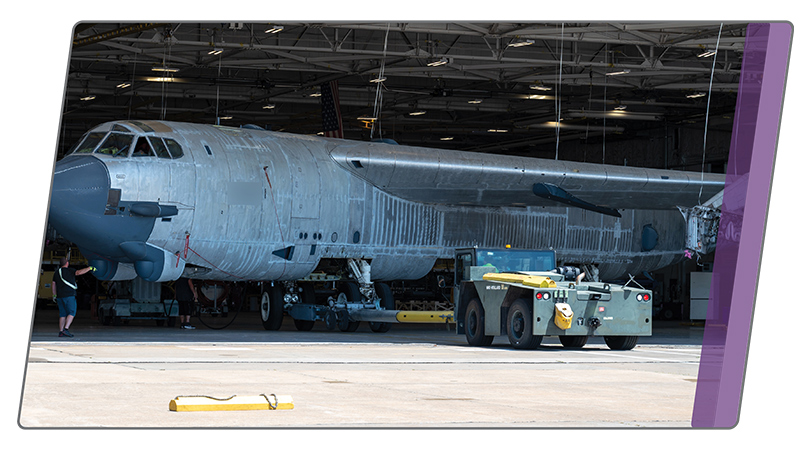
The U.S. Air Force’s B-52 Stratofortress fleet faces unprecedented maintenance challenges as these 63-year-old bombers struggle with declining readiness rates, massive modernization delays, and ballooning costs that threaten operational capability through their planned service life to 2060. Mission capable rates have plummeted from 65.73% in 2020 to just 54% in 2024, marking the lowest readiness levels in over a decade. The aging fleet requires 62 maintenance hours for every flight hour, while critical modernization programs have slipped by three years and exceeded budgets by billions of dollars. With only 76 aircraft remaining from the original 744 built between 1954-1962, the Air Force confronts the reality of maintaining what will become the first century-old combat aircraft in military history.
Maintenance hours eclipse flight time sixfold
The B-52 fleet demands extraordinary maintenance resources that far exceed those of newer aircraft. Each flight hour requires 62 maintenance man hours, significantly higher than modern commercial aircraft but still better than the B-1B’s 74 hours. At Tinker Air Force Base, over 500 specialized maintainers work year-round to keep these bombers airworthy, processing approximately 17 aircraft annually through depot maintenance cycles.
Depot maintenance occurs every four years, with each aircraft spending 220-260 days undergoing comprehensive overhaul. The duration depends heavily on parts availability and the extent of age-related structural repairs needed. Maintainers routinely discover stress fractures, corrosion, and component failures that require extensive work. The Oklahoma City Air Logistics Complex employs over 10,000 military and civilian personnel, with dedicated teams specializing in hydraulics, electronics, avionics, life support, communications, engines, and structural repairs.
The maintenance burden extends beyond scheduled depot work. Field-level maintenance teams at operational bases deal with frequent equipment failures during preflight checks. Common issues include Combat Network Communications Technology (CONECT) display malfunctions, radar altimeter failures, and targeting pod breakdowns. These failures often force crews to make difficult “go/no-go” decisions, frequently flying with degraded capabilities using backup systems.
Readiness rates reveal systemic decline
B-52 readiness has deteriorated significantly over the past five years, reflecting the cumulative impact of aging systems and deferred modernization. The mission capable rate dropped from a relatively healthy 65.73% in 2019-2020 to 54% in 2024, meaning nearly half the fleet cannot perform assigned missions at any given time. This represents a stark contrast to the 80.5% mission capable rate achieved in 2000-2001, when B-52s were the most reliable bombers in the inventory.
Despite these challenges, the B-52 still outperforms its younger bomber siblings. The B-1B manages only 47% mission capable rates, while the stealthy B-2 achieves 56%. All three bomber types now operate below the Air Force’s target of 75% mission capability, creating strategic concerns about nuclear deterrence and conventional strike capacity.
Aircraft availability tells a slightly better story, with B-52s maintaining nearly 80% availability over the past five years compared to about 50% for the B-1 and B-2. However, availability merely indicates an aircraft exists in flyable condition, not that it can perform its full mission set. The gap between availability and mission capability highlights the extent of degraded systems crews must work around.
Vanishing vendors compound parts crisis
The B-52’s greatest maintenance challenge stems from “vanishing vendor syndrome” as original manufacturers cease operations or abandon legacy product lines. The current TF33 engines, designed in the 1950s and out of production since 1985, exemplify this crisis. The Air Force lacks a comprehensive spare parts inventory list, forcing maintainers to cannibalize components from other aircraft or custom-manufacture replacements at significant cost and delay.
Common Aircraft on Ground (AOG) events result from predictable failure points. CONECT digital displays frequently malfunction, forcing crews to revert to analog backups. The AN/APQ-166 radar system suffers from a 63% failure rate due to obsolescence and parts scarcity. Engine-related problems, including inlet distortion and fuel system leaks, ground aircraft regularly. Electrical and avionics issues plague the aging wiring harnesses and power generation systems.
These parts challenges directly impact depot maintenance timelines. What should be routine component replacements stretch into months-long searches for alternatives. The Air Force has contracted for specific components like engine nose cowls ($35.9 million for 174 units) and wheels/brakes ($34.7 million through 2028), but thousands of other parts lack ready suppliers.
Modernization delays threaten 2060 service goal
The Air Force’s plan to fly B-52s until 2060 depends on successful completion of two major modernization programs, both now years behind schedule and billions over budget. The Commercial Engine Replacement Program (CERP) to install new Rolls-Royce F130 engines has slipped from a 2030 to 2033 initial operational capability, with costs ballooning from $12.5 billion to $15 billion. Engineers discovered engine inlet airflow distortion problems during 2024-2025 testing, requiring a complete redesign that added 10 months to the schedule.
The Radar Modernization Program (RMP) faces even steeper challenges. Costs jumped from $2.3 billion in 2021 to $3.3 billion in 2024, triggering a Nunn-McCurdy breach requiring congressional notification. Technical failures plague the program, including fiber optic communication line failures between processors and material defects in the radome design. Low-rate initial production slipped from late 2024 to spring 2025, then to late 2026.
These delays create a cascade of problems. The Air Force must maintain increasingly unreliable legacy systems years longer than planned while paying contractors for extended development support. Meanwhile, potential adversaries advance their air defense capabilities against a bomber fleet flying with 1980s-era radar and 1950s engines.
Maintenance costs outpace newer bombers
Despite its age, the B-52 remains the most economical bomber to operate at $88,354 per flight hour, compared to $173,014 for the B-1B and $150,741 for the B-2. However, this advantage erodes as maintenance requirements intensify and modernization costs mount. The total B-52 modernization program now stands at $48.6 billion, approaching the acquisition cost of an entirely new aircraft program.
Direct maintenance accounts for only part of the economic impact. Schedule delays force the Air Force to spend billions maintaining obsolete systems while modernization programs consume additional funds without delivering capability. The 20% cost growth in CERP ($2.5 billion increase) and 43% growth in RMP ($1 billion increase) represent funds unavailable for other priorities.
Maintenance errors and unscheduled repairs impose additional costs. While specific B-52 AOG costs remain classified, comparison with commercial aviation suggests each grounding event costs hundreds of thousands of dollars in lost capability and recovery expenses. The Air Force experienced 21 ground maintenance mishaps in fiscal 2023, nearly double the previous year, indicating systemic issues with aging aircraft maintenance.
Technical specifications reveal complexity
B-52 maintenance involves managing thousands of technical specifications across multiple variants and modification states. Critical torque specifications for structural components must account for metal fatigue after six decades of stress cycles. The flexible wing design, while providing excellent high-altitude performance, experiences accelerated fatigue at eight times the normal rate during low-altitude operations.
Structural inspections focus on known problem areas including wing attach points, fuselage longerons, and control surfaces. Maintainers use digital X-ray technology and other non-destructive testing methods to identify cracks before catastrophic failure. Edwards Air Force Base recently completed accelerated flap track inspections 17 days ahead of schedule using digital radiography, demonstrating how modern techniques can improve efficiency.
Temperature variations between the B-52’s split-level cockpit create additional maintenance challenges, stressing electrical connections and avionics. The 185-foot wingspan prevents hangar storage at many bases, exposing aircraft to extreme weather from North Dakota winters to Pacific salt air, accelerating corrosion and seal degradation.
Future demands century of service
The path to 2060 operations requires unprecedented maintenance achievements. No combat aircraft has approached 100 years of service, making the B-52 a test case for extreme life extension. Boeing estimates the “oldest” B-52H has accumulated 21,000 flight hours with 17,800 hours remaining before reaching structural limits. At current usage rates of 380 hours annually, the math suggests feasibility, but assumes successful modernization and continued parts availability.
The Air Force’s maintenance strategy emphasizes replacing “anything that even looks broken” during depot visits. This conservative approach prevents in-flight failures but increases costs and time. New facilities like Tinker’s planned “bomber agile common hangar” starting construction in 2026 will house four B-52s simultaneously, acknowledging extended maintenance timelines as the new normal.
Workforce development presents another critical challenge. Training maintainers from apprentice (3-level) to craftsman (7-level) takes years, while retention suffers from private sector competition. The Air Force has implemented special pay and assignment incentives but still faces a gap of over 500 maintainers as of 2024.
Conclusion
The B-52’s maintenance story exemplifies both American military ingenuity and the limits of life extension. These bombers have already served longer than any combat aircraft in history, yet must fly four more decades to meet strategic requirements. Success demands not just technical solutions but sustained political will to fund modernization despite delays and overruns. The alternative—allowing readiness to further deteriorate—risks creating a “bomber gap” before sufficient B-21 Raiders enter service. For maintainers at bases from Minot to Guam, each successful launch represents a small victory against time, technology, and the inexorable forces of entropy acting on 60-year-old aluminum and steel.