Virtual Reality Across the Employee Lifecycle: Part 3
Virtual Reality Across the Employee Lifecycle: Part 3
Executive Summary
At what point during the employee lifecycle is it optimal to introduce virtual reality? The answer depends entirely on context. VR’s potential as a workforce tool varies dramatically based on when and how it’s deployed — and the consequences of getting it wrong range from wasted investment to legal liability.
This paper examines the question across three phases: recruiting, selection, and learning and development. The opportunity gradient is clear. In recruiting, VR offers an exciting, low-risk way to attract candidates — provided the experience is polished. In selection, VR-based assessment holds promise for authentic evaluation but introduces significant legal, psychometric, and practical risks. In learning and development, VR finds its natural home — the highest opportunity with the lowest risk.
Threading through all three phases is a single, unifying challenge: Day-1 readiness. Workers in dangerous occupations need extensive, varied practice to build reliable skills. But the work itself is too dangerous for traditional repetition-based learning. Well-designed VR training has enormous potential to resolve this conflict — but only when deployed at the right lifecycle stage, with the right safeguards.
Part 3: Learning & Development — VR’s Natural Home
Learning & Development: The Sweet Spot
Why L&D Is VR’s Natural Home
The risk/reward calculus shifts dramatically once someone is an employee rather than an applicant, and the focus is on skill enhancement versus skill measurement for hiring decisions. Legal constraints around equal treatment are relaxed. Alternate modalities with standards different from those expected in a selection context. The organization already has a relationship with the learner and can accommodate individual differences more flexibly. Most importantly, the core objective — building permanent, transferable skills for dangerous tasks — aligns directly with VR’s fundamental strengths. This is the most opportune and natural phase for VR technology, with substantially more opportunity and less risk than either recruiting or selection.
Tracking and Adapting to Individual Skill Profiles
Conventional training treats every learner as if they have the same skill profile and learning pace. VR changes this. A well-designed platform continuously measures each employee’s skill levels across multiple dimensions through direct observation of performance on realistic tasks. That measurement drives adaptation: training adjusts at every touchpoint to the individual’s current profile, delivering harder challenges where proficiency is high and targeted remediation where gaps exist.
Adaptive Immersion’s enabling technologies illustrate what this looks like in practice. XRank provides embedded precision assessment — fine-grained skill metrics at the level of individual decisions, not just pass/fail outcomes. RemiXR, an AI-enhanced scenario generation engine, produces the variants needed to support individualized training paths. Each trainee’s next scenario is calibrated to their specific development needs, not a generic curriculum.
Simulating the Exact Dangers — Safely
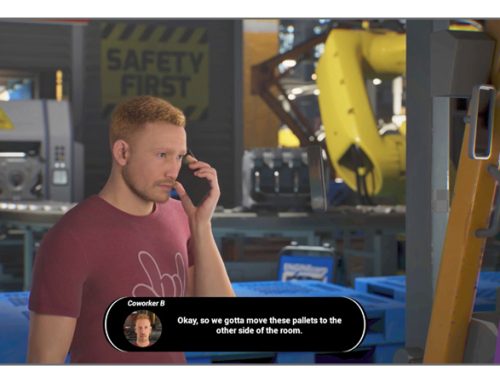
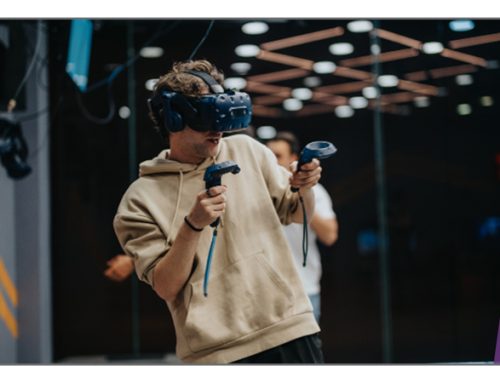
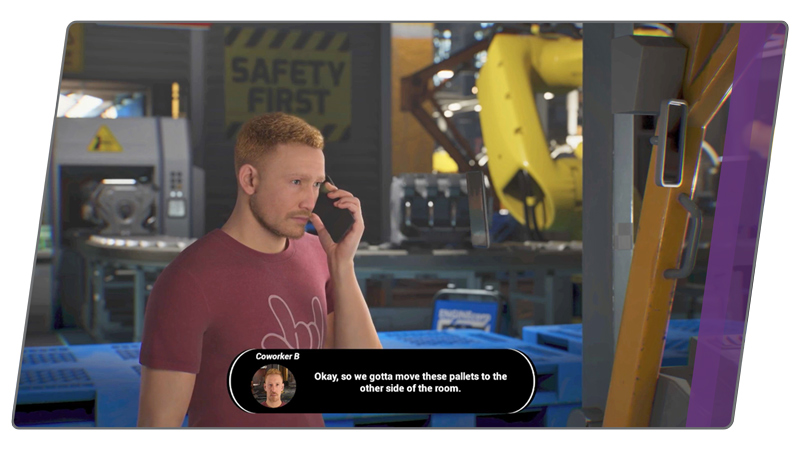
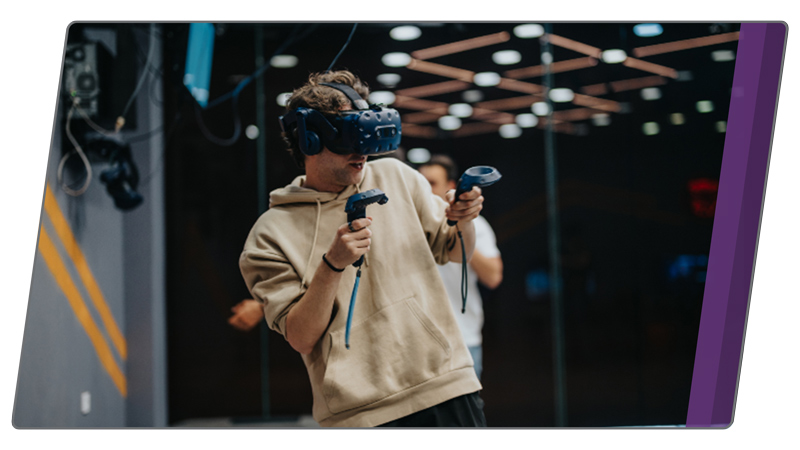
This is the biggest opportunity in the entire employee lifecycle, connecting directly to the Day-1 readiness problem. VR can simulate the exact technical tasks and safety challenges employees face in the workplace — actual procedural steps, with realistic tools and equipment, in environments replicating specific job conditions. Employees practice with unlimited repetitions before encountering real danger.
Most powerfully, VR can recreate the exact circumstances that led to previous critical incidents and give workers the chance to practice the correct response until it becomes automatic. When scenarios are grounded in real incident databases and actual failure patterns, trainees encounter the specific hazard signatures that cause real injuries. This directly resolves the fundamental Day-1 tension: the conflict between the need for repeated practice in authentic environments and the danger of performing that practice in the real work environment.
Psychological Fidelity: Beyond Visual Realism
Not all VR training is created equal, and the difference that matters most is often overlooked. Most systems focus on visual fidelity: does it look real? Visual quality matters, but it’s not the primary driver of whether skills transfer to the real world.
Transfer depends on psychological fidelity — the degree to which training recreates the same cognitive demands, decision pressures, and action-response dynamics of the real environment. Does the trainee experience the task psychologically the same way they would on the job? Are the connections between actions and environmental responses authentic? Without psychological fidelity, VR produces learners who are mechanically familiar with procedures but psychologically unprepared for performing them under genuine pressure.
Achieving this requires more than photorealistic graphics. It demands spatial audio replicating the sensory environment, haptic feedback for realistic tool interaction, and scenario design grounded in real incident patterns. It also requires what Adaptive Immersion calls “invisible” instructor guidance — coaching delivered at the teachable moment inside the scenario through technologies like XReach, without pausing the action or breaking the immersion. When feedback interrupts the scenario, it disrupts exactly the conditions under which instincts need to form.
Integration and Safeguards
VR training shouldn’t operate in isolation. Integrating VR performance metrics with the broader L&D system — classroom completions, certifications, on-the-job evaluations — provides a holistic view of each employee’s readiness. This enables better decisions about when workers are prepared for unsupervised work and proactive identification of skill decay before it results in an incident.
Even in L&D, not every employee will be ideal for VR in every session. The good news: offering alternate modalities — AR overlays, desktop simulation, video-guided practice — is far less legally complex than in selection. The requirement for psychometric equivalence is significantly relaxed. Organizations can use VR as the primary modality while maintaining alternate pathways, making VR-centered programs practical to implement at scale.
Summary
L&D represents the highest opportunity and lowest risk for VR across the employee lifecycle. The technology’s core strengths — safe repetition, precision skill tracking, adaptive personalization, and psychological fidelity — directly address the fundamental challenges of preparing frontline workers for dangerous occupations.
Connecting the Lifecycle: From Preview to Proficiency
A well-designed VR strategy doesn’t treat these phases as isolated. A recruiting preview generates early engagement data. Selection insights inform initial training pathways. L&D skill data identifies high performers, flags skill decay, and informs future recruiting strategies. The through-line is a progressively richer picture of each person’s capabilities — from first contact through ongoing mastery — supported by an integrated technology stack with safeguards calibrated to each phase’s risk profile.
Recommendations
- For recruiting: Invest in a polished, frictionless experience. Consider VR as one modality among several. Measure impact on applicant pool quality and early retention.
- For selection: Proceed with extreme caution. Prioritize applicant welfare and fairness above all. Ensure legally defensible safeguards, formal psychometric equating, and standardized conditions before deployment. Evaluate whether VR’s incremental validity justifies the cost.
- For learning and development: This is VR’s natural home. Prioritize psychological fidelity over visual realism. Invest in precision assessment that drives adaptive training. Integrate VR metrics with the broader L&D ecosystem. Focus on Day-1 readiness and safe, high-volume practice of the exact tasks workers will face on the job.
The organizations that extract the most value from VR will deploy it strategically across the lifecycle — with the right intensity, the right safeguards, and a clear-eyed understanding of where VR creates genuine value versus where it creates unnecessary risk. The question is not whether VR belongs in workforce development. It’s where, when, and how.