Adaptive Immersion Puts a Number on Procedural XR Training at the Global XR Summit: Up to $10 Million a Year From Better Job Performance Alone
Adaptive Immersion Puts a Number on Procedural XR Training at the Global XR Summit: Up to $10 Million a Year From Better Job Performance Alone
Dr. Phillip M. Mangos walked defense and aviation training leaders through the key factors behind the figure, the pass-or-fail assessment that drives it, and what operators keep asking for: more content, more scenarios, and more data
Adaptive Immersion CEO and Chief Scientist Dr. Phillip M. Mangos told training leaders at the Global XR Summit this week that procedural XR training can return millions of dollars per year in improved job performance value for a large, engaged user base. The estimate is based on hard data from real operators. Reduced travel, maintenance, and logistics for live training could add millions more in savings — a cost reduction of roughly 67 percent.
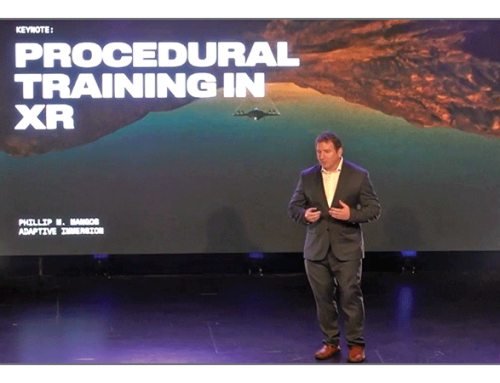
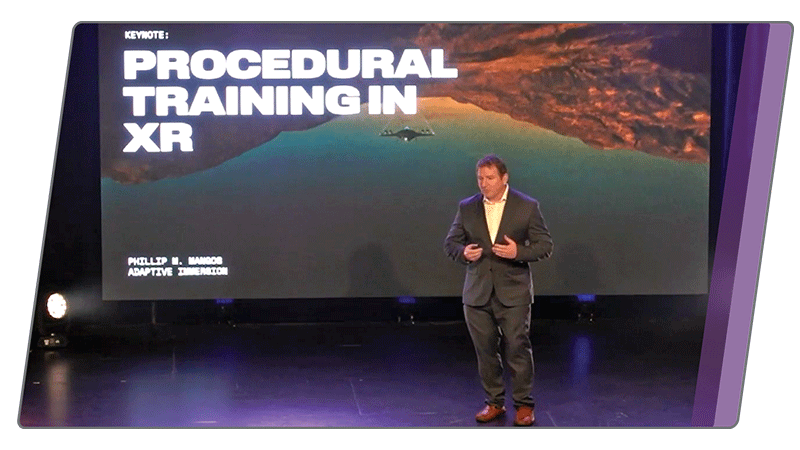
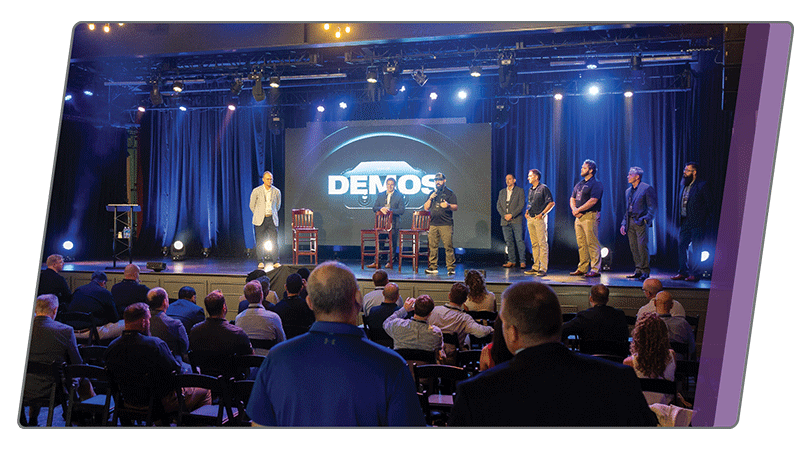
The session, “Procedural Training in XR: Results from the Field,” ran September 1 at the summit’s first U.S. edition, hosted by Varjo at The Factory at Franklin, outside Nashville. The room held military training programs, civil aviation operators, and the primes and integrators who work with them. Much of the XR training the industry has seen is built for pilots. In the Formula 1 analogy Mangos used, Adaptive Immersion supports the pit crew: the maintainers, weapons professionals, and explosives experts who keep the aircraft alive and in the fight.
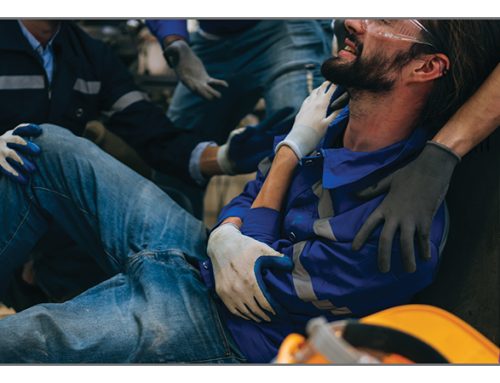
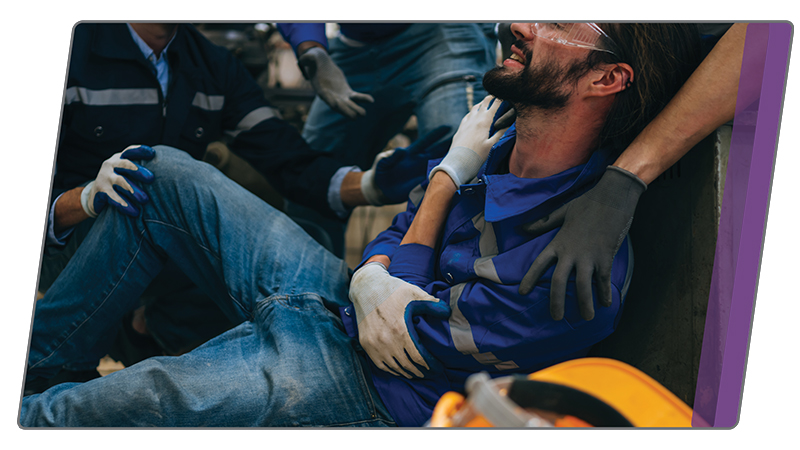
Those jobs are hands-on, procedural, technical, and dangerous. The risk of injury is highest in an operator’s first 90 days, which produces what Mangos called the paradox of live training for dangerous work. Permanent skill development takes many repetitions and a lot of variety. But the earliest repetitions are also the most dangerous ones, because the trainee is face to face with the hazard. Live sites add a fight for access, limited reps and sets, and often oversimplified evaluation standards and debrief content. The alternative he described puts the site in the headset and generates new scenarios on demand for countless repetitions. Every run ends with replay, scoring on the key mission competencies, and assessments that run quietly in the background. Adaptive Immersion’s shorthand for it: practice the worst-case scenario, every day.
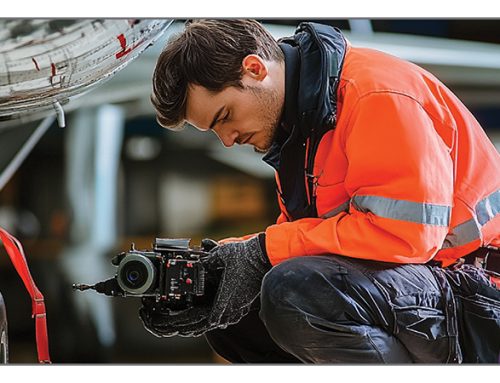
Two field programs anchored the talk. XReach™, Adaptive Immersion’s aircraft-maintenance XR training, is built for what Mangos called a textbook case of the dangerous first 90 days. A new maintainer’s first close contact with real equipment and real hazards comes before the reps that make safe work second nature. Barely two weeks before the summit, he noted, a ground-handling worker had been struck and killed by an aircraft. And a maintainer’s responsibility for an aircraft’s integrity, he argued, rivals the pilot’s: if a maintenance problem is not resolved, the aircraft is not going anywhere. The second program is Adaptive Immersion’s virtual reality training for explosive ordnance disposal, or EOD. Operators have told Mangos that every scenario is potentially the worst case and every one is different, so no memorized procedure covers them all. The goal is to develop higher-order mental skills, such as adaptability and resourcefulness, through intelligent scenario generation that supplies variety and volume in a virtual replica of the task environment.
The multimillion-dollar ROI figure comes with a clear boundary. It assumes 1,000 operators a year, and it requires a final training-effectiveness assessment embedded in the XR program, which sets the standard for a trainee to be treated as certified and mission-ready. The finding is corroborated by Adaptive Immersion’s own internal studies and by a recent independent government study. The annual job-performance return ranged from about $5 million to $10 million across Air Force EOD technicians, Marine Corps EOD technicians, and military police. In per-operator terms, that is roughly $14,000 more productivity a year. Several key factors drive the model: the validity of the training, the success benchmark, throughput, the value of the job’s output, and the complexity of the job. Complex work widens the gap between top and bottom performers, creating more opportunity to realize value by enhancing performance. The model is anchored by the finding that high performers — those one standard deviation above the mean — produce about 40 percent more value than average performers.
One finding stood out. Trainees who passed the embedded assessment produced an additional $21,000 in annual job productivity value, per person, relative to peers who failed the assessment. That gap is the one factor XR practitioners can control most directly, Mangos said, through how demanding the assessment is and how high the passing standard is set. A higher standard means more reps and sets to reach mastery, and that translates to better job performance.
“Effective training rewires people’s brains, and that is the key link in the causal chain,” said Mangos. “Well-designed XR training leads to better skill acquisition and retention, which leads to better job performance, which leads to better financial outcomes for the organization. The math is not the hard part. The hard part is building the measurement framework that proves every link in that chain, because that is what lets you tell an ROI story a stakeholder can trust.”
Mangos closed the data section with the operators’ own requests: more content, more diverse scenarios, and easier access to their performance data. Feedback has to flow both ways, he said, because much of the learning happens after the run, when the operator has a moment to reflect and prepare for the next one.
Three final takeaways: XR training is essential for hands-on dangerous jobs; smart scenarios should be built from real-world content; and ROI is a real, measurable, causal outcome of XR training. The session opens a season of immersive-training events for Adaptive Immersion, including public LinkedIn Live sneak previews beginning in September and the Augmented Enterprise Summit in Atlanta, October 13–15, where the company demos at booth 121.
For the training leader who has to defend an XR budget line this year, the message from Franklin was a demanding one. The return is real and it can be measured, but it shows up only for programs willing to set a passing standard, hold to it, and prove every link between the headset and the job.