As the Air Force Consolidates 50-Plus Maintenance Specialties Into Seven, Adaptive Immersion Outlines What Cross-Trained Maintainers Need From XR Training
As the Air Force Consolidates 50-Plus Maintenance Specialties Into Seven, Adaptive Immersion Outlines What Cross-Trained Maintainers Need From XR Training
The generalist maintainer’s first exposure to each new airframe multiplies; rehearsal before the first live turn and measurement that follows the technician across aircraft become the training problem
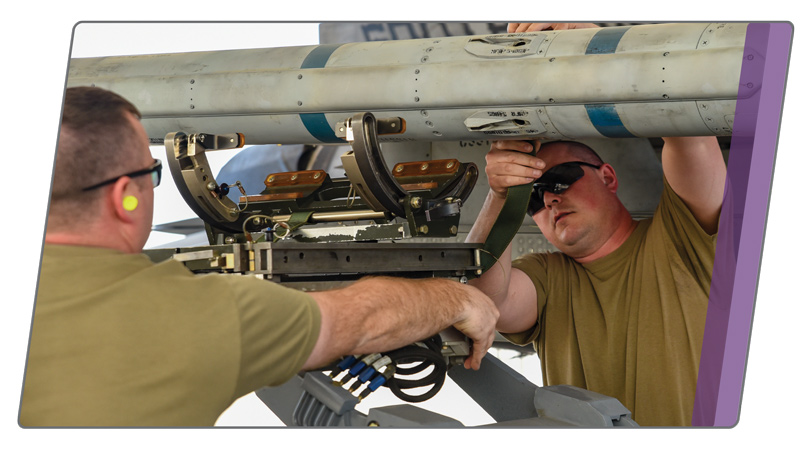
The U.S. Air Force plans to condense more than 50 aircraft-maintenance specialties into seven beginning in 2027, reshaping training for roughly 56,500 Airmen in its 2A career fields, according to the service’s published transformation plan as reported by Air & Space Forces Magazine. Under the plan, junior enlisted maintainers begin on a single Aviation Maintenance Technician track built around common launch-and-recovery tasks, then branch into six specialist areas — avionics and electrical, aerospace ground equipment, advanced mechanical, crew support systems, fabrication, and intermediate-level engines — with mid-career technicians able to become “nose-to-tail” cross-functional experts on a specific airframe.
Adaptive Immersion, which fields extended-reality training for aircraft maintainers, weapons professionals, and explosive ordnance disposal technicians at multiple military bases, today outlined the training consequence of the plan: a generalist’s first exposure to each airframe’s hazards multiplies.
“A maintainer who used to learn one aircraft’s panels, procedures, and stored-energy hazards will now learn several, and each one has a first time,” said Dr. Phillip M. Mangos, CEO of Adaptive Immersion. “The first time you open a panel on a live jet is the most dangerous repetition you will ever get on it. Multiply that by the number of airframes a cross-trained technician touches and the training problem is obvious: the first repetition has to happen somewhere other than the flightline, and the technician’s competence has to travel with them from one aircraft to the next instead of resetting to zero.”
The change lands in a demanding year. Fiscal 2027 opened on October 1 under a continuing resolution that runs to December 11 and, as reported, delays new program starts, contracts, and training activities. At the same time, the service is on track to wing about 1,500 new pilots this fiscal year, a goal it has chased for years — each of whom inherits an aircraft that a maintainer must generate.
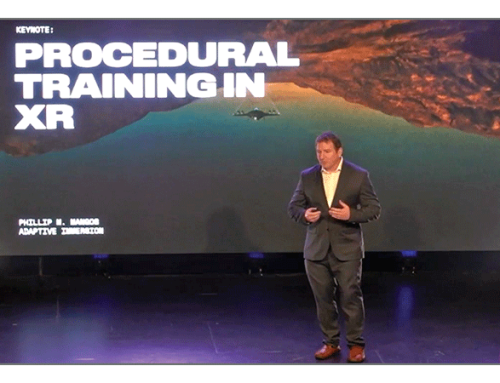
Adaptive Immersion’s answer rests on two capabilities the company has fielded with military maintainers. The first is procedural rehearsal that runs in virtual reality and executes in augmented reality on real hardware from a single procedure graph, so that practice never drifts from performance — the XReach approach the company demonstrated at the Global XR Summit in September. The second is a measurement layer built into every rehearsal that records what the technician noticed, verified, and did, producing a competence record that can follow a maintainer across airframes rather than a pass/fail stamp that expires at the next aircraft.
The company presented field results from those programs at the Global XR Summit, including an estimated yearly return from improved job performance of about $5 million to $10 million for each of three operator groups at 1,000 trainees per year, and an estimated $21,000 annual difference in job-performance value between trainees who passed the embedded assessment and those who did not. Those figures are the company’s own estimates from fielded programs and carry the assumptions stated in that presentation.
“The Air Force is asking for a maintainer who is at home on more aircraft than any generation before,” Mangos said. “The service can decide that the generalist learns each new airframe by exposure, or it can decide that the first hundred repetitions happen in a headset and the flightline gets a technician who has already been there. That decision is a training decision, and it is available now.”