A $100 Million Recruiting Push Produced About 9,700 Shipbuilders in a Year. Adaptive Immersion’s November “Decoding Dangerous Jobs” Edition Asks What Keeps Them Past the First.
A $100 Million Recruiting Push Produced About 9,700 Shipbuilders in a Year. Adaptive Immersion’s November “Decoding Dangerous Jobs” Edition Asks What Keeps Them Past the First.
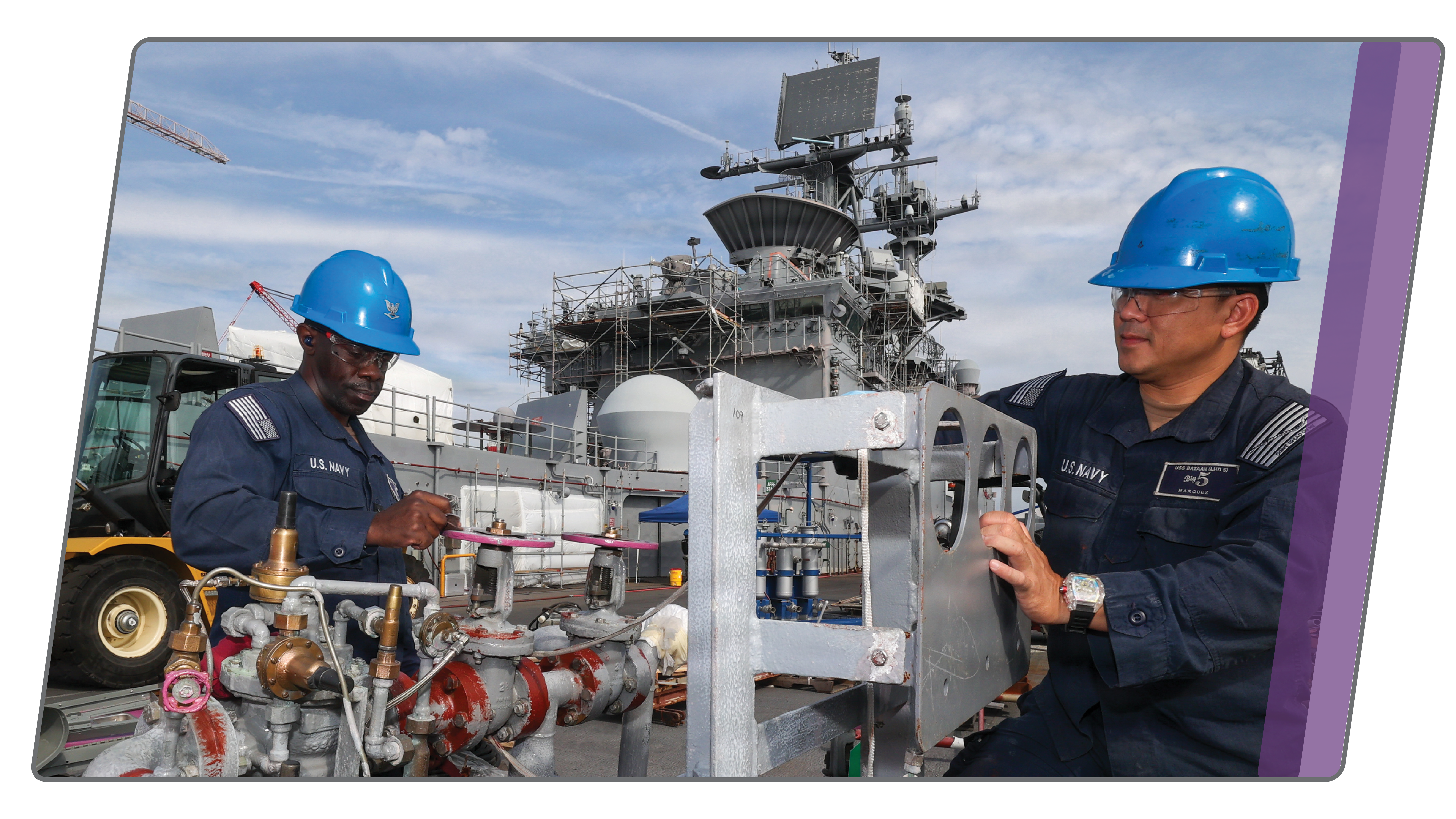
Adaptive Immersion will devote the November edition of its “Decoding Dangerous Jobs” newsletter, and a public LinkedIn Live on Friday, Nov. 6, to the first year of frontline shipbuilding work. It is the year when half or more of new hires leave. It is also the year they meet the job’s hazards for the first time.
The numbers come from the Navy’s own account. In fiscal 2023, the Navy’s shipbuilder recruiting campaign drew 16 million website hits and 2.5 million applications. It produced about 9,700 hires on roughly $100 million in recruiting spend, according to testimony reported by Breaking Defense in March 2025. That is about $10,000 per hire before a single hour of training. In the same testimony, Brett Seidle, then the Navy’s acting acquisition executive, said the yards “probably are seeing 50 to 60 percent attrition in our first-year employees.” The Navy’s stated goal is 100,000 new shipbuilders over ten years.
Huntington Ingalls Industries, the largest military shipbuilder, hires about 6,000 workers a year, its chief executive told USNI News in April 2025. He called attrition among new shipbuilders “very, very high.” The Government Accountability Office told Congress the same spring that none of the seven shipbuilders building Navy battle-force ships is positioned to meet the Navy’s delivery goals. Reaching the fleet target would take about 13 ship deliveries a year for 30 years. Shipbuilders delivered seven in fiscal 2023.
The first year is where the hazards live
A new shipbuilder’s first months are spent in tanks, voids and cofferdams, on staging, around rigging and suspended loads, and near hot work. The federal shipyard rules, 29 CFR Part 1915, give each of those its own subpart. In a confined or enclosed space, a shipyard competent person tests oxygen, flammability and toxicity, in that order, before anyone enters. Rigging and materials handling, scaffolds and ladders, and welding, cutting and heating each have their own rules. The National Institute for Occupational Safety and Health puts the nonfatal injury and illness rate in ship and boat building at about 5,370 per 100,000 workers, nearly twice the rate for all U.S. workers.
On the morning of Oct. 23, 2024, two subcontractor employees died at a Norfolk, Virginia ship-repair yard when an overhead lift fell aboard a Navy sealift ship. OSHA found the load had not been secured with safety rigging before lifting. It also found the rigging had been attached to pre-installed U-bolts that could not support the lift. The agency cited the yard under the shipyard “use of gear” standard, 29 CFR 1915.116. The November edition walks that sequence as a chain of barriers, not as a story about the people in it.
Why the shipyard is next
At Augmented Enterprise Summit in October, Adaptive Immersion ran a request line: visitors told the company what belonged in the headset next. The top request, in the company’s after-action log, was confined space. Realistic tool use, task-agnostic scenario generation, and hybrid workspaces that combine confined space and height followed. The shipyard tank is the first answer to the top request.
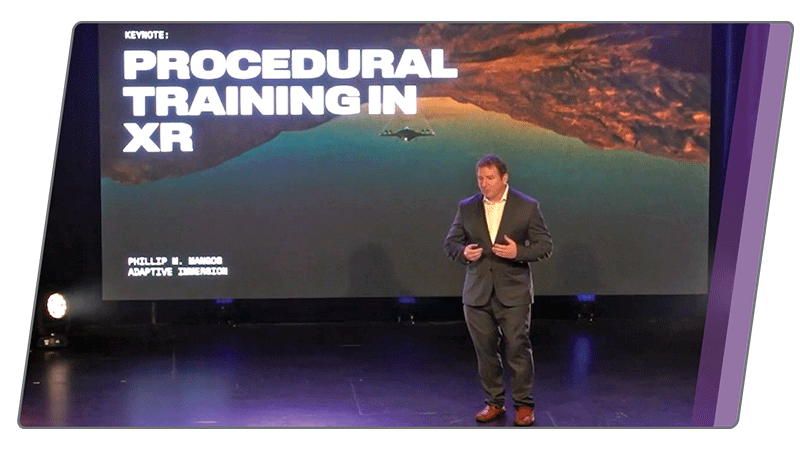
The Nov. 6 session, “Decoded: Shipbuilders — The First Year Is the Dangerous One,” is hosted by Dr. Phillip M. Mangos, Adaptive Immersion’s CEO and Chief Scientist. It runs 30 minutes: the job, the Norfolk sequence, the numbers, and a live segment inside the headset. That segment uses the company’s shipped confined-space and working-at-height content, enclosed-space entry and close-clearance movement, together with the cramped-space shipyard scene the company showed on Oct. 23. The shipyard-specific build is being shaped by the request line. It will be presented as work in progress, not as a finished module.
“Half of the people who start in a shipyard this year will not be there next year. The ones who stay meet the tank, the staging and the suspended load for the first time with everything on the line,” said Dr. Mangos. “You cannot make a first shift safe by describing it. You can let someone walk the space, find the clearances and practice the egress before the day it counts. That is what we mean by day-one readiness, and the shipyard is where the request line sent us.”
The newsletter edition publishes Thursday morning, Nov. 5. The Live streams free on the Adaptive Immersion LinkedIn account.
For shipyard training, safety and workforce leaders, the edition puts one question on the table. Of the hours a new hire gets before the first shift, how many are spent inside the space where the first year’s risk lives?