Adaptive Immersion Brings “See Through the Casing” Ordnance Training to the EOD Technology & Bombing Prevention Summit, Which Drew More Than 700 Attendees Last Year
Adaptive Immersion Brings “See Through the Casing” Ordnance Training to the EOD Technology & Bombing Prevention Summit, Which Drew More Than 700 Attendees Last Year
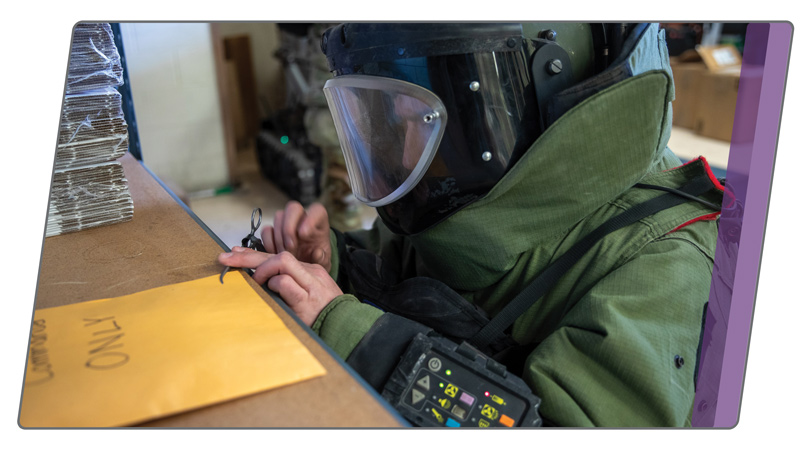
Adaptive Immersion will exhibit at the EOD Technology & Bombing Prevention Summit, Dec. 1–3 at the Gaylord National Resort & Convention Center in National Harbor, Maryland, booth 317. The 2025 edition drew more than 700 attendees, 47 exhibitors and more than 100 speakers, according to Naval Sea Systems Command. The United States Bomb Technician Association and NSWC Indian Head Division’s EOD Technology Center co-hosted that edition.
The company’s demo set is built around three problems a bomb technician faces, in the military or in public safety. It gets a public preview on LinkedIn Live on Friday, Nov. 20, eleven days before the floor opens.
Problem one: the casing hides the decision
A render-safe procedure depends on what is inside a device: the initiator, the arming parts, the main charge. On a real item, none of that is visible. The first few seconds of recognition set up everything after. MAVEN, Adaptive Immersion’s multiplayer EOD and counter-WMD environment, lets a technician see through the casing to the component level. The technician then practices the render-safe sequence under a clock, while an instructor watches every decision.
Problem two: the bomb that flies to you
Army EOD technicians rendered more than 100,000 improvised explosive devices safe in Iraq and Afghanistan over two decades, Task & Purpose reported in August 2024. The Army’s EOD units are now adding drones and drone-delivered explosives to their exercises. One was an interagency drone-defeat exercise at Joint Base Lewis-McChord with the FBI and the Air Force. At the National Training Center, one threat platform can swarm up to 150 drones from a single ground control station, the Center for Army Lessons Learned wrote in September 2025. The munitions those drones drop are simulated with foam rounds.
The devices arriving by air are new, often damaged on impact, and not in any manual. Adaptive Immersion’s drone-delivered-ordnance scenarios, announced in August. It generates new variants each run, so a team rehearses the reasoning rather than a fixed answer key.
Problem three: the venue you have never walked
The ATF’s United States Bomb Data Center logged 18,365 explosives-related incidents in 2024. They included 353 bombings and 6,227 suspicious or unattended package incidents. Most bombing prevention happens before an event: the walkthrough, the threat-placement exercise, the response staging. MAVEN RESPONDER builds a digital twin of a venue, so a team can do that work in the headset before the crowd arrives.
The preview and the request line
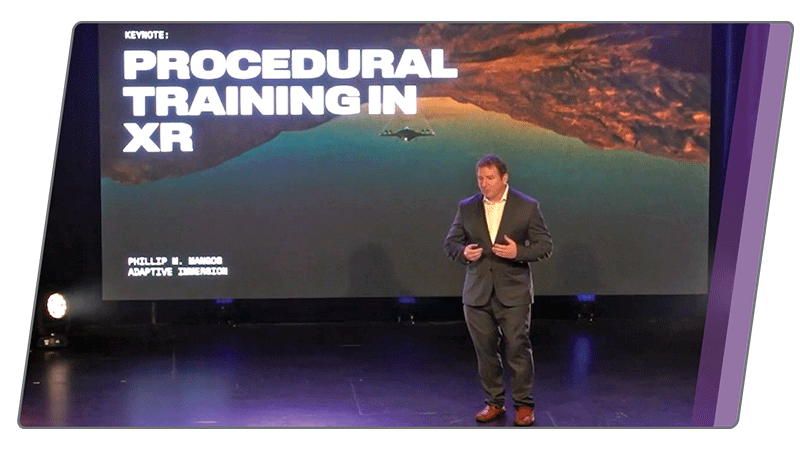
The Nov. 20 session, “Before the Floor,” is hosted by Dr. Phillip M. Mangos, Adaptive Immersion’s CEO and Chief Scientist. It mirrors the company’s October after-action format. Each segment opens with a sourced number and the problem, then shows the content. It closes by opening a request line for the summit: what should an EOD team be able to rehearse that no range allows? Requests logged on Nov. 20 shape what runs at the booth. A December after-action session closes the loop.
“Every EOD technician I have met will tell you the device that worries them is the one they have never seen,” said Dr. Mangos. “A range cannot hand you that device on demand, and a slide cannot make you decide under a clock. Inside the headset we can do both, and we can measure what the technician saw and when. That is the only reliable way to find out whether someone is ready for the configuration nobody has catalogued.”
The summit draws military EOD technicians, public-safety bomb technicians, bombing-prevention professionals, international partners, government and industry technologists, and academia, according to its public site.
For EOD and bomb-squad leaders coming to National Harbor, the invitation is simple: bring the device your team has never seen. The question behind it is the one that matters. How does your program know a technician is ready for that device before the day it arrives?